Ridges blocking line of sight
The terrain itself can reduce or completely block signal from an otherwise well-aligned dish.
Wilderness homes cling to steep hills above the river, lakes and beach. Great views — but tricky roofs and hills that can sit right between your dish and the satellite.
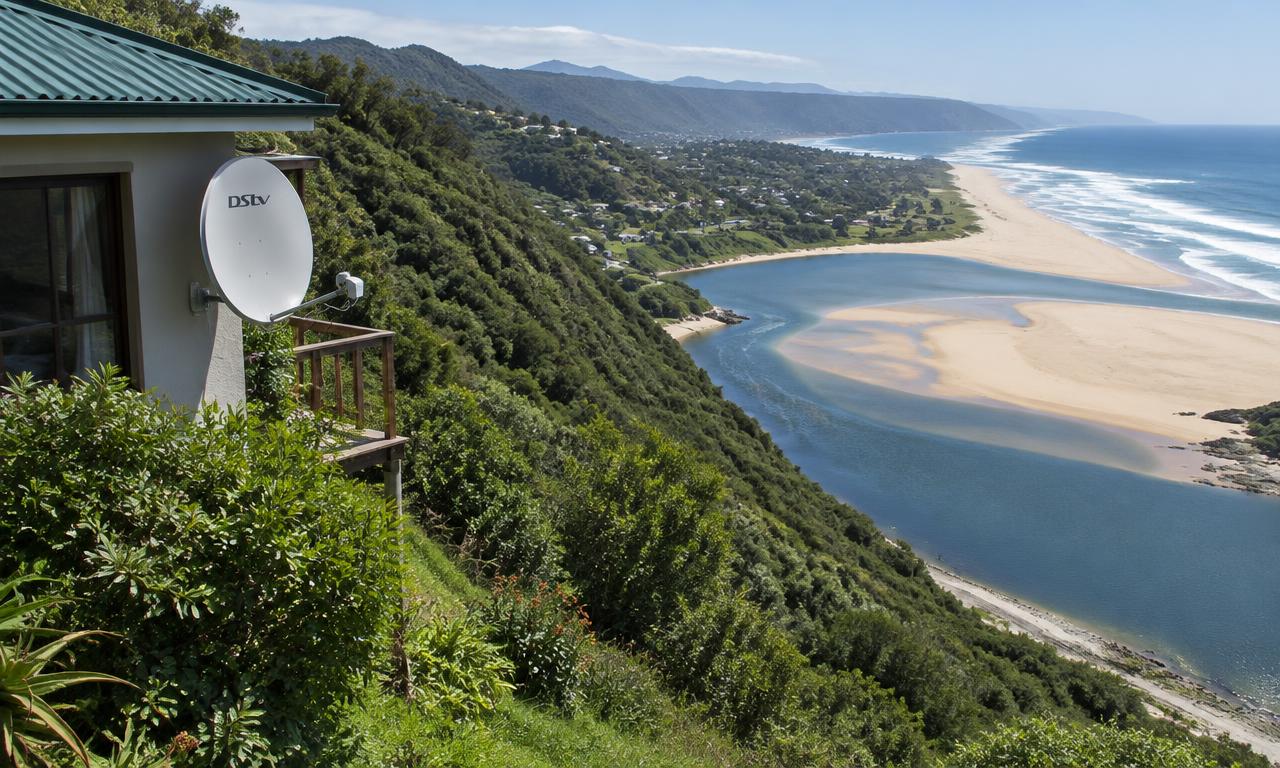
Homes on the south-facing slopes can have the hill itself, or neighbouring houses above, blocking the view to the satellite. Steep, high roofs also make DIY fixes dangerous, so dishes often stay badly placed for years.
Local weather, buildings and surroundings can affect each installation differently. These are the issues worth checking first in Wilderness.
The terrain itself can reduce or completely block signal from an otherwise well-aligned dish.
A previous dish may have been placed on a steep edge where servicing it safely is difficult.
Extended brackets and elevated mounts need firm anchoring to prevent gradual movement.
Local installation advice
Wilderness installations need a careful site survey because two homes on the same road can have very different views of the satellite. We compare safe mounting points at ground, wall and roof level, then balance clear line of sight with secure access and a protected cable route.
New DSTV installations for homes, complexes and businesses
Dish alignment and repositioning after wind and storms
No-signal and error-code repairs
Extra View and multi-room setups
Decoder setup, cabling and connections
We cover Wilderness village, Wilderness Heights, Kleinkrantz, Hoekwil, Touwsranten and surrounds.
Often there is. We test different mounting points and use extended or pole mounts to get above the obstruction.
Yes, we cover Wilderness and nearby areas.
No. The best position is one with clear line of sight and a secure fixing; a lower wall or pole can sometimes work better.
Explore nearby service areas and their common local signal problems.